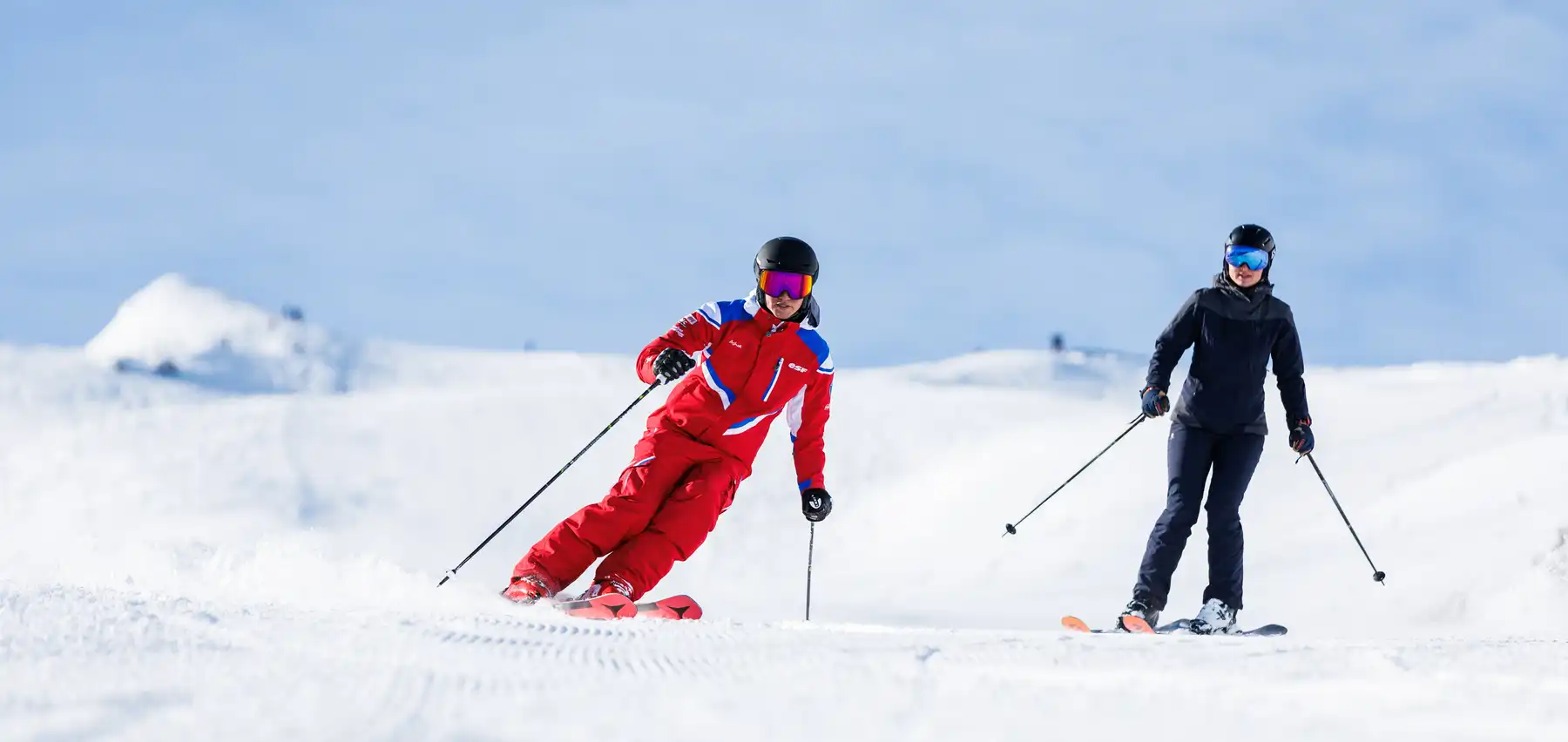
Skiing and snowboarding: why a good warm-up makes all the difference
Published on 12/01/2026 - Written by Coline
Whatever your level, it's important to prepare for a sport such as skiing or snowboarding. You've chosen your slope, booked your lesson, you're dressed and rested? There's just one step before you start: warming up!
To make sure your skiing session goes as smoothly as possible, there's nothing like preparing your body for the effort ahead. This will help you reduce the risk of injury and ensure you're in tip-top shape when you hit the slopes. Discover all esf Méribel 's advice for a successful warm-up.
To make sure your skiing session goes as smoothly as possible, there's nothing like preparing your body for the effort ahead. This will help you reduce the risk of injury and ensure you're in tip-top shape when you hit the slopes. Discover all esf Méribel 's advice for a successful warm-up.
Warming up, an essential step in skiing and snowboarding
Often forgotten before starting a ski or snowboard lesson, the warm-up is an essential step in any sporting activity. Skiing and snowboarding are activities that require a lot of muscle power for several hours at a time.
By warming up properly, you stimulate your blood circulation and increase your body temperature. In this way, your body will be supplied with oxygen and nutrients more quickly, preparing it effectively for physical exercise and limiting the risk of injury and muscle soreness.
But warming up also means preparing your mind for sport. In fact, you are gradually getting into your sliding session and sending stimuli to your brain about the approach of physical activity. It's a good way to concentrate fully on the session ahead and be ready to give it your all!
By warming up properly, you stimulate your blood circulation and increase your body temperature. In this way, your body will be supplied with oxygen and nutrients more quickly, preparing it effectively for physical exercise and limiting the risk of injury and muscle soreness.
But warming up also means preparing your mind for sport. In fact, you are gradually getting into your sliding session and sending stimuli to your brain about the approach of physical activity. It's a good way to concentrate fully on the session ahead and be ready to give it your all!
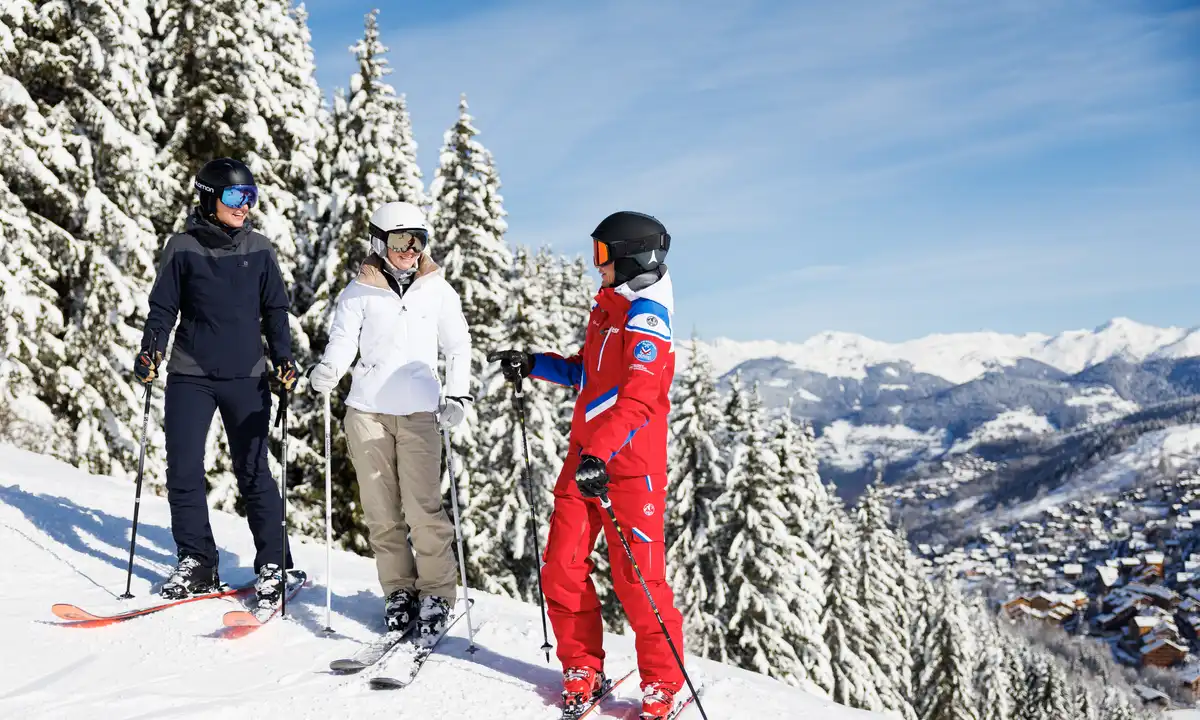 Learning or progressing: our ski instructors will guide youSki lessons for young and old alike
What type of warm-up should I do before skiing or snowboarding?
Warming up is a quick and easy step. By getting into the right routine, you can be sure of having the best conditions for learning the basics of skiing, perfecting your technique and discovering the best spots in the area.
We recommend that you warm up for 5 to 10 minutes with a sequence of stretches and exercises targeting the different muscle groups involved. You can repeat the following movements about ten times:
We recommend that you warm up for 5 to 10 minutes with a sequence of stretches and exercises targeting the different muscle groups involved. You can repeat the following movements about ten times:
- Clockwise rotation of the neck, then counter-clockwise;
- Circles with outstretched arms, forwards and then backwards;
- Rotation of the pelvis with the hands on the hips;
- Knee rotation with legs bent;
- Squats, jumps and walking on the spot to stimulate the lower body;
- Unwind your back to stretch.
Don't forget to stretch after skiing to help you recover!
A complete skiing or snowboarding session also requires excellent recovery. To limit the risk of muscle soreness, particularly if you've just had an injury or are skiing for the first time, we recommend that you don't neglect your post-activity stretching.
Give your cardio system time to wind down, and after a hot shower, don't hesitate to get on with your exercises. Arms, shoulders, legs, glutes: stretch each part of your body for at least thirty seconds. It's the perfect way to get back on the slopes in good shape the next day!
Give your cardio system time to wind down, and after a hot shower, don't hesitate to get on with your exercises. Arms, shoulders, legs, glutes: stretch each part of your body for at least thirty seconds. It's the perfect way to get back on the slopes in good shape the next day!
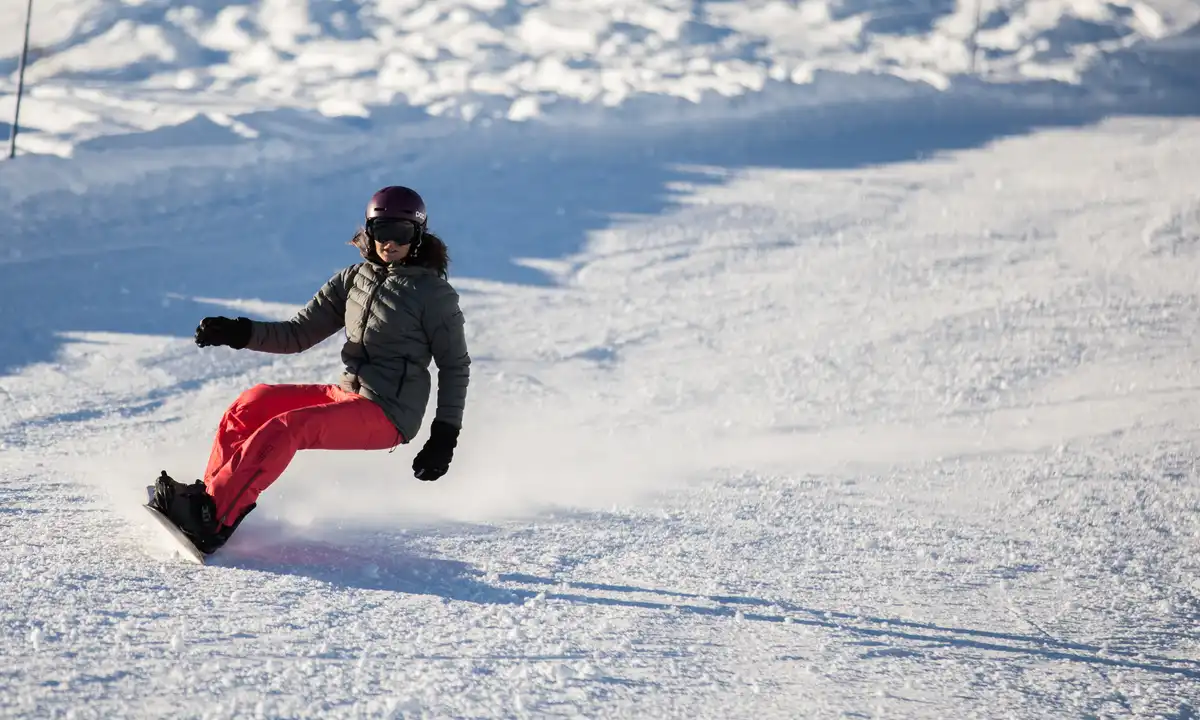 Discover the unique sensations of slidingSnowboard lessons for all levels